

With data centers a looming topic in Nassau County and thousands of communities, the county’s leaders reviewed a fact-finding committee’s initial draft report at a Monday workshop outlining the types of data centers, community input and going over case studies from nearby areas.
Data centers and their impacts are a national issue gripping the nation and playing a role in the mid-term elections. Nassau County issued a year-long moratorium on data centers in June while its fact-finding committee got to work, issuing its 66-page draft report last week.
Proponents of data centers state the facilities are much-needed digital infrastructure to support the country’s massive demand for things like AI and cloud storage, noting that local and state governments receive tax money. Advocates point to a drain on natural resources, noise and owners with pockets so big that fines are unsubstantial.
County Manager Taco Pope, Operations Director Amy Bell and Conservation and Natural Resource Manager Taylor Clem led proceedings on Monday.
Pope said Nassau is desirable for data centers because it has a large transmission line cutting through it, proximity to power and natural gas, and some areas with a sparse population. Data centers are not “one size fits all,” in terms of uses, he said.
The county broke down the several different types: Server rooms, data center accessories, and small, medium, large, campus and mega campus data centers, depending on the square footage.
Pope said it was important to complete the due diligence now on what the county can limit when or if a proposed data center comes to the fore. A key component of that was making sure the county doesn’t duplicate the role of another regulatory agency, such as the St. Johns River Water Management District. County Attorney Denise May said an outright ban was risky due to state law.
Bell said it was evident staff needed to visit a few sites. Ultimately, they went to four data centers in Georgia (Fayetteville, Atlanta, Lithia Springs and Stanton Springs) and to the Cologix data center in Jacksonville. They also reviewed five case studies, two in Memphis, one in Aldie, Virginia, and one in both Jacksonville and Orlando.
The fact-finding committee wanted to determine what specifically would be different in Nassau. Though staff would go into greater detail on the site visits at future meetings, Bell said some developers do try to take advantage.
“We have developments being built today that take the path of least resistance and focus their development in areas who currently do not have any regulations, or very limited regulations, and they maximize their buildout as much as they possibly can,” Bell said.
Clem’s presentation related to community input, and how the county should put the findings of its report to use. He recalled the committee’s use of several experts and said residents want short- and long-term accountability and communication, and a responsible policy. Clem said concerns are interconnected, but perspectives vary drastically. He also said misinformation needs be corrected by fact-based analysis.
The primary concerns included scale, facility type, the potential site, infrastructure, and compatibility, Clem added. Other concerns were impacts on water quality, water use, regional impacts, economic opportunities and community benefits.
From the case studies, there will be “bad actors,” Pope acknowledged.
“When we did the analysis, the concerns expressed by the citizens are valid. There are some legitimately really bad actors out there who really don’t care,” Pope said.
Pope said the construction of one of the case studies was a surprise in how much it disrupted the surrounding area’s noise and traffic. When asked by commissioners about light pollution, Pope said he questioned a center with significant lighting and was told that “nobody asked” during that area’s planning process.
Commissioners largely thanked the community and experts for their input and said the board and county staff needed to continue looking at research, case studies, legal remedies and potential impacts as they continue their due diligence.
“The rest of the state of Florida is looking at Nassau County right now because of the process we have undertaken,” Commissioner A.M. “Hupp” Huppman said. “And I believe that it’s been responsible. It’s been engaged by the public in this process.”
During public comment, residents expressed concern with data centers and urged the county to take action. Evelyn Horkey questioned whether the county could ban data centers and told them to do what people are asking for.
“Nobody wants this in the county and it’s like you all shove stuff everything down our throats that nobody wants,” she said.
Peggy Walsh said so many things are impacted by data centers, whether it’s land, water, power or traffic. She said no one understands what the benefits are. She said the county needs to make it financially tough for data centers to open, so they look elsewhere.
“Convince me. Convince all of us, what is the benefit?” Walsh said.
The next workshop is scheduled for Nov. 9 with the final report and regulations published on Nov. 25.
nblank@fbnewsleader.com
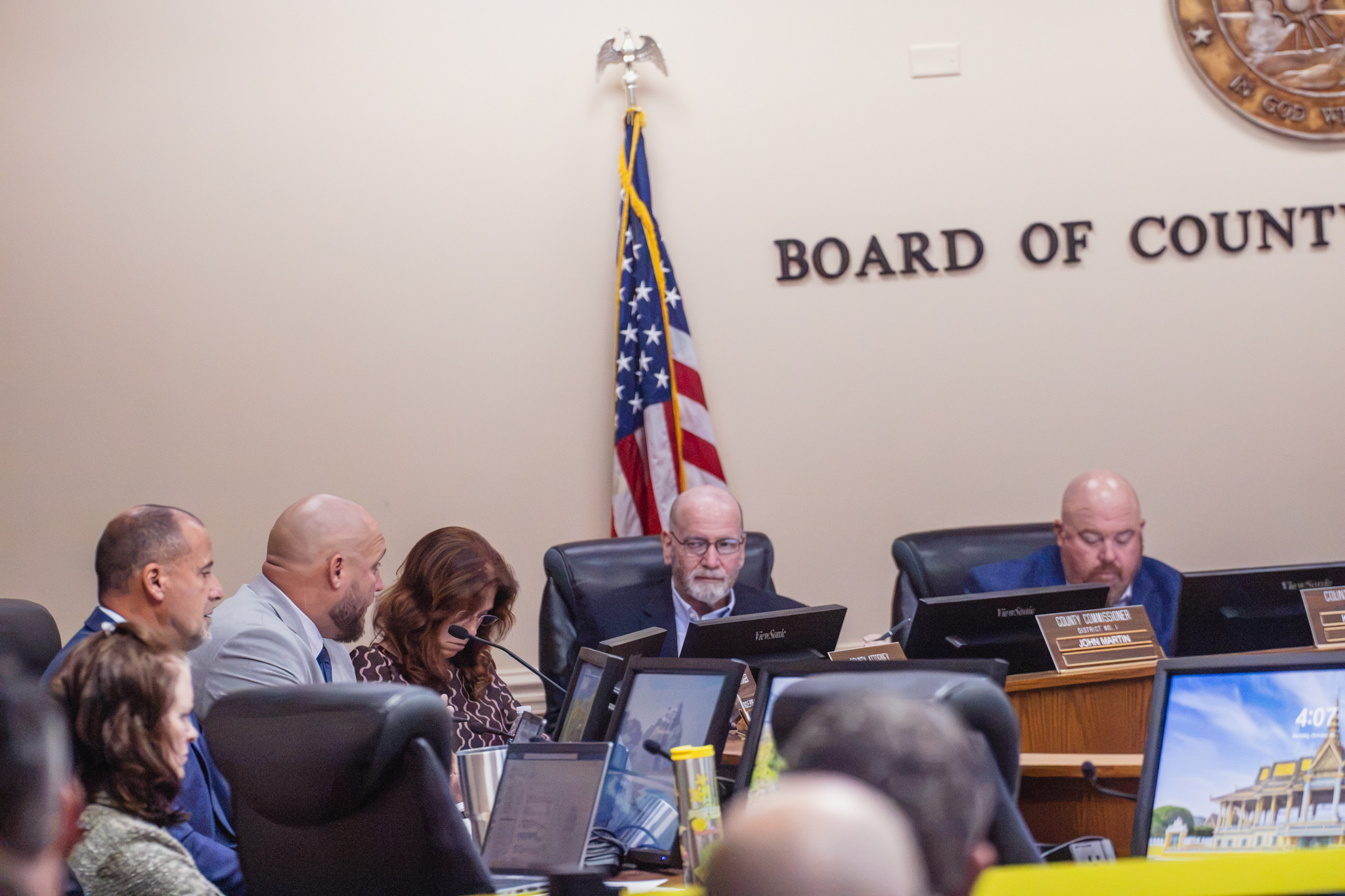
Nassau County Board of County Comissioners and county staff listen to the results of the data center fact-finding committee workshop series.
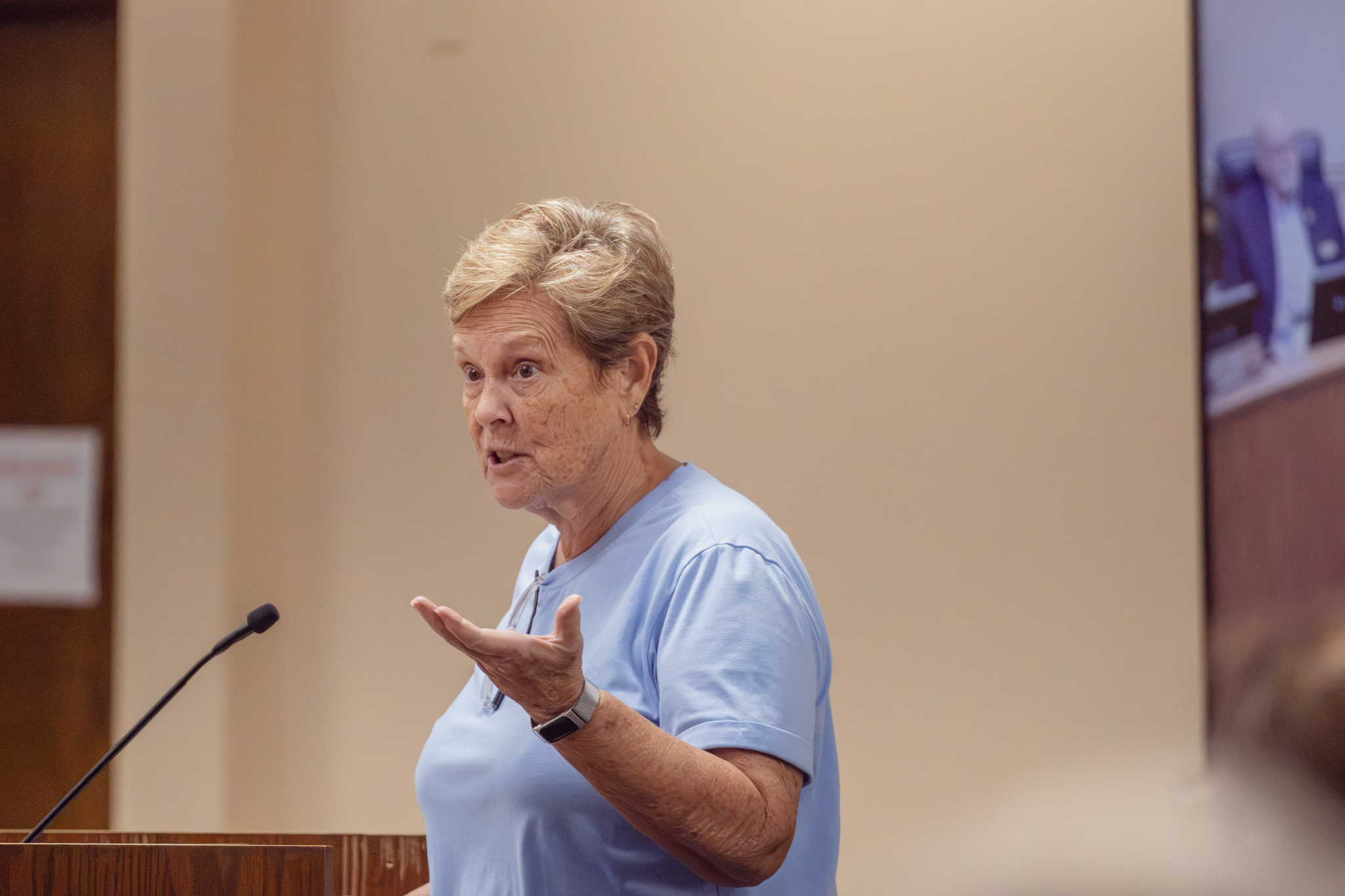
Nassau County resident Peggy Walsh asks what the data center were and said taxpayers need to be convinced of the benefit of data centers in the county. Photo by Nick Blank/ News-Leader
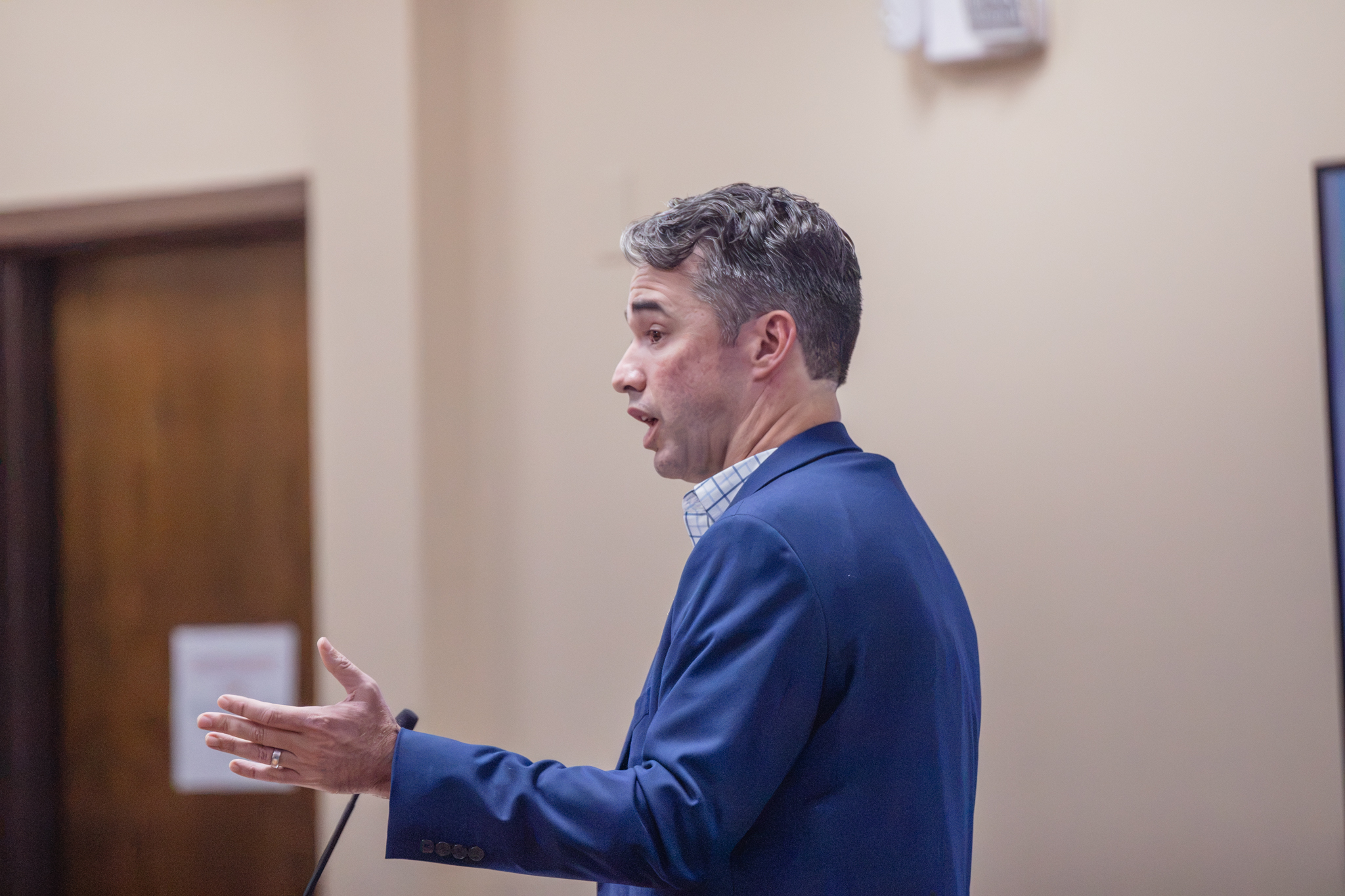
Natural Resource Manager Taylor Clem speaks during the workshop over the Data Center fact-finding committee’s initial report. Photo by Nick Blank/ News-Leader