

While horses on Cumberland Island date back more than 400 years, the present population is both feral and, in large part, starving. They’re also causing environmental damage to the island.
Last year, a group of advocates including the Georgia Equine Rescue League, the Georgia Horse Council, scientist Will Harlan and island resident Carol Ruckdeschel filed suit against the National Park Service and others to move the horses off the island and to somewhere more suitable.
Friday, a federal judge said no dice.
“No one wishes to see animals suffer, and Plaintiffs have plausibly argued that the NPS should take steps to protect and manage Cumberland Island’s feral horse population, not only for the well-being of the horses, but also to preserve the island’s ecosystem and its endangered species,” wrote Judge Sarah Geraghty of the Northern District of Georgia. “While this case must be dismissed, the Court hopes that the important issues Plaintiffs have raised here might spur the NPS or other agencies to act.”
The National Park Service, in its 2018 National Resource Condition Asassessment, reported, “Horses have been known to trample native vegetation, wetland and bird nests, and (have) had dramatic impacts on the marsh habitats due to overgrazing. However, the species is also a substantial attraction for visitors of the island.
“The feral horse herd (on Cumberland Island) is currently unmanaged and there is not a general horse management plan; however, the NPS does conduct an annual horse herd count when timing and volunteer scheduling allows.”
The NPS notes that a rider on a mid-1990s bill in Congress explicitly banned the NPS from actively managing or removing the horses, though since that rider expired, the NPS hasn’t “removed, medically cared for, or provided (the horses) with food/water.”
The plaintiffs, in their complaint, pointed out the NPS and, by extension, the state of Georgia, have known about the problems facing horses and their impacts on the island for some time but haven’t acted to intervene.
“NPS and the State, by refusing to adequately manage the horses of Cumberland, have failed to provide the necessary food, water, veterinary services, and humane care that are specifically required by the Georgia Equine Act, OCGA §§ 4-4-110 et seq., and the Humane Care for Equines Act, OCGA §§ 4-13-1 et seq.,” according to the complaint. “Their neglect of duty has resulted in a horse population that is ill, malnourished, and deprived of a normal life expectancy.”
Regardless, the federal government, under sovereign immunity, must consent to be sued, which Geraghty wrote did not happen.
“Plaintiffs’ amended complaint contends that the federal Defendants ‘have accepted the applicability of the laws of the State of Georgia within the Cumberland Island National Seashore – waived sovereign immunity subject to the supremacy clause – in entering a Con-current Jurisdiction Agreement,’” Geraghty wrote.
“Plaintiffs do not cite any authority in support of this argument. The mere fact that federal and state authorities have agreed to exercise concurrent law enforcement jurisdiction over Cumberland Island does not constitute ‘a clear statement’ waiving sovereign immunity and subjecting the federal government to suit under Georgia state law.”
As well, Geraghty wrote that the plaintiffs “failed to plausibly allege any agency action that could constitute a ‘take’ within the meaning of the (Endangered Species Act),” pointing out horses roamed the island before the establishment of the Cumberland Island National Seashore.
“That Defendants have not intervened to manage the horses does not mean they have engaged in an unlawful ‘take’ of any ESA-listed species,” Geraghty wrote.
Gloria Bell of the Georgia Equine Rescue League said following the ruling that no horses should look as they do on Cumberland – they’re unhealthy and starving – while Georgia agencies tasked with following and enforcing equine laws have not done so in this matter and worked to get the complaint dismissed.
“(The Cumberland horses) require care when trapped on an island that does not provide for ‘equine’ needs,” she said. “NPS knows this and ignores this. They need hay and water so they won’t suffer through another winter. Horses need grasslands, not a thick ceiling of maritime forests.”
Attorney Hal Wright of Athens, who represented the plaintiffs, pointed out the court ruled that, because the NPS took no action toward the horses, there was nothing justifying judicial review.
“The essence of the court’s opinion established only that the court is ‘unwilling’ rather than ‘unable’ to enforce the laws and statutes against the National Park Service,” Wright said. “I echo the court’s hopes that ‘the important issues Plaintiffs have raised here might spur the NPS or other agencies to act.’”
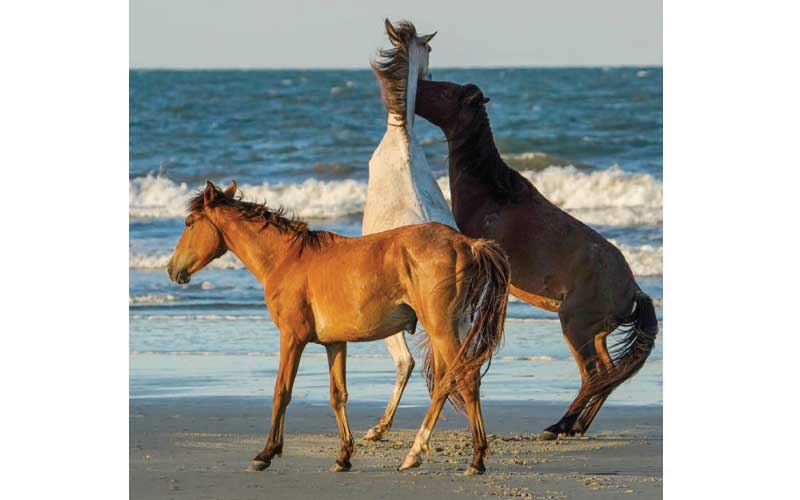
A federal judge recently dismissed a lawsuit on behalf of Cumberland Island horses. Photo courtesy Jay Smith/Special