


Taylor Clem
Monarch butterflies are more than just beautiful visitors fluttering through our gardens—they are essential pollinators that play a vital role in maintaining healthy ecosystems and supporting agricultural production. Unfortunately, Monarch populations are declining, and their survival is at risk. With the potential for the Monarch butterfly to be listed as a threatened species by the U.S. Fish and Wildlife Service, it’s important for us to rethink how we manage our landscapes and find ways to protect these incredible creatures and other pollinators.
Monarchs are famous for their long migration, traveling from Canada to Mexico. However, their journey starts in the spring, when they lay their eggs on milkweed plants, the only host plant for their larvae. Monarchs need specific species of milkweed to survive, but there’s a problem. Not all milkweed is the same. While Monarchs feed on many plants for nectar, their survival depends on particular species of milkweed and one variety – tropical milkweed - has become a significant barrier to their survival.
Tropical milkweed (Asclepias curassavica) is commonly sold in stores and planted in gardens across Florida, but it does more harm than good. Unlike native milkweed, tropical milkweed doesn’t die back in the winter, which disrupts the Monarch migration cycle. Some Monarchs end up staying in place, rather than migrating, and become vulnerable to cold temperatures. Additionally, a parasite called Ophryocystis elektroscirrha (OE), which naturally accumulates on milkweed, thrives when tropical milkweed stays green year-round. As the parasite population grows unchecked, it causes deformities in Monarchs and further threatens their numbers.
At UF/IFAS Extension Nassau County, we are working to educate homeowners and gardeners about the importance of removing tropical milkweed from landscapes and replacing it with native milkweed species. Removing tropical milkweed is a simple but effective way to help Monarch populations. If you’re not able to completely remove it, cutting back the plant during the cooler months will help reduce the parasite load and encourage Monarchs to continue their migration.
Florida is home to 21 native species of milkweed, and it’s essential to replace tropical milkweed with these native varieties. Native milkweed, such as Butterfly Weed (Asclepias tuberosa), thrives in full sun and is a great choice for Florida landscapes. It’s important to note that tropical milkweed is sometimes sold under the name “Butterfly Weed,” so make sure to check the plant’s sap. tropical milkweed produces a milky white sap, while Butterfly Weed produces a translucent, watery sap.
In addition to removing tropical milkweed, you can help monarchs and other pollinators thrive by following Florida-Friendly Landscaping guidelines. The program's fifth principle, "Attract Wildlife," encourages planting and managing landscapes that provide shelter and food for wildlife, including butterflies.
As a Nassau County resident, you can also make a difference by talking to your neighbors, schools, and community groups about the importance of Monarchs and other pollinators. Sharing the knowledge you’ve gained can inspire others to take action and even start their own pollinator gardens.
At UF/IFAS Extension Nassau County, we are committed to helping our community protect Monarchs and other pollinators. We’ve partnered with local nurseries to promote the sale of native milkweed species and we offer educational programs for homeowners, schools, and businesses on pollinator-friendly practices. We are also working with homeowners’ associations (HOAs) and community groups to update landscaping guidelines to support wildlife, including Monarchs. One of the exciting initiatives we are launching this year is “No Mow March,” which encourages homeowners to let wildflowers grow on their properties, helping to create a haven for pollinators.
While removing tropical milkweed and planting native species is a big step in the right direction, we still face challenges. One of the biggest obstacles is the widespread availability of tropical milkweed in stores. Additionally, this non-native plant continues to spread into natural areas, making it harder to manage. But with continued education and community action, we can turn the tide in favor of Monarchs.
Saving Monarch butterflies requires collective effort and with your help, Nassau County can be a place where these beautiful creatures thrive. By removing tropical milkweed, planting native milkweed and following sustainable landscaping practices, you’ll not only be helping Monarchs, but also contributing to a healthier, more biodiverse community for everyone.
If you would like to learn more about creating a Florida-Friendly, pollinator-friendly landscape, feel free to reach out to the Master Gardener Volunteer Help Desk at NassauMGV@ifas.ufl.edu.
Dr. Taylor Clem is the County Extension director and horticulture extension agent for UF/IFAS Extension Nassau County. Contact him at taylorclem87@ufl.edu or 904-530-6353.
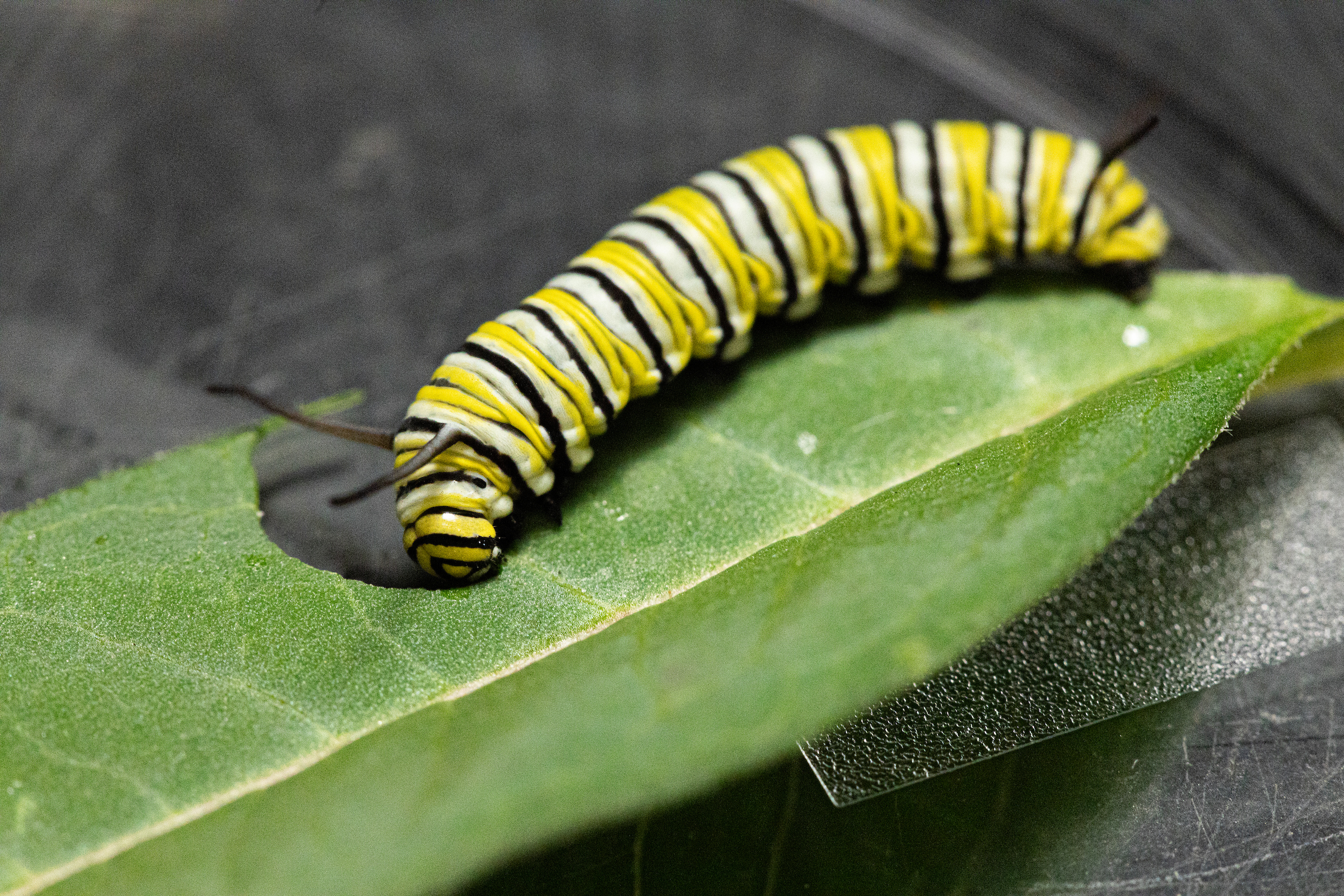
Monarch caterpillars depend on Milkweed plants as their host, despite the toxic sap. While Monarchs have evolved to tolerate the plant's toxicity, if Milkweed doesn’t die back in the winter, the toxins can build up to levels that surpass the caterpillars' tolerance, leading to their death. Submitted photo