

Along with the Clearwater Marine Aquarium Research Institute (CMARI), the Amelia Island Whale Ambassadors are celebrating the first calf sighting of the North Atlantic right whale calving season.
Researchers with CMARI sighted the first right whale mom and calf pair of the 2023-24 season off the coast of South Carolina. The mother, Juno, who is estimated to be more than 38 years old, has successfully given birth to her eighth documented calf.
“Juno’s new calf represents hope for this critically endangered whale species,” Candis Whitney with the Amelia Island Whale Ambassadors told the News-Leader. “We celebrate every new birth, as it is the representation of whether this population will recover and prosper. May Juno’s baby be the first of many.”
As November marks the beginning of the calving season, CMARI’s team conducts aerial surveys, ensuring the continued protection of this majestic species. Last week, they spotted seven right whales swimming off the coast from North Carolina to Georgia.
While this sighting is highly anticipated and celebrated, researchers from around the world caution that despite a recent increase in their numbers, factors such as slow reproduction rate, entanglement in fishing gear, collisions with vessels and other unidentified threats continue to pose significant challenges.
Currently it is estimated there are approximately 360 North Atlantic right whales remaining, scientifically known as Eubalaena glacialis, including fewer than 70 reproductively active females, further highlighting the urgent need for conservation efforts.
Calving season is an especially vulnerable period for right whales. To protect the species in their calving grounds and migratory route, Seasonal Management Areas have been designated off the coasts of Northeast Florida, Georgia, South Carolina and North Carolina, starting in November. In these areas, vessels 65 feet and greater are required to maintain a speed of 10 knots or less to minimize the risk of collisions.
“It is extremely important, through these Seasonal Management Areas, to provide a safe haven for mothers and calves in the only known calving ground for this species,” Dr. James “Buddy” Powell, executive director of CMARI said. For half a century, the North Atlantic right whale has been protected as an endangered species under the Endangered Species Act and the Marine Mammal Protection Act.
In their ongoing commitment to safeguarding the North Atlantic right whale, CMARI aerial teams collaborate with various organizations, including NOAA Fisheries, Georgia DNR, South Carolina DNR, U.S. Army Corps of Engineers, U.S. Coast Guard Atlantic Area Command, U.S. Navy, and Florida Fish and Wildlife Conservation Commission.
Together, they work to mitigate ship collisions, monitor reproductive rates, provide crucial scientific data for marine decision-makers, assist in disentangling whales from fishing gear, locate carcasses for recovery and necropsies and aid in genetic research.
Fernandina Beach has hosted the Right Whale Festival since 2019 and drew 20,000 attendees this year. The festival coincides with the season when the right whale migrates from Canada down to the waters surrounding Amelia Island to raise their young.
“After the record-breaking attendance at the Right Whale Festival earlier this month, there has been ever greater excitement about the right whales’ return to the warm waters of the Southeast,” Whitney said. “We have been walking our beaches daily, waiting and watching for the right whales to return to Amelia Island.” She asked the public’s help to spot whales.
“On Amelia Island, we are extraordinarily fortunate to be able to see Right Whales from our beaches,” she said. “We encourage everyone to keep watch. If you are boating offshore, please keep a sharp lookout, and keep a 500-yard distance. If you should see anything that might possibly resemble a right whale, please call Blue World Research Institute’s Right Whale Sighting Network at 888-979-4253.”
jroberts@fbnewsleader.com
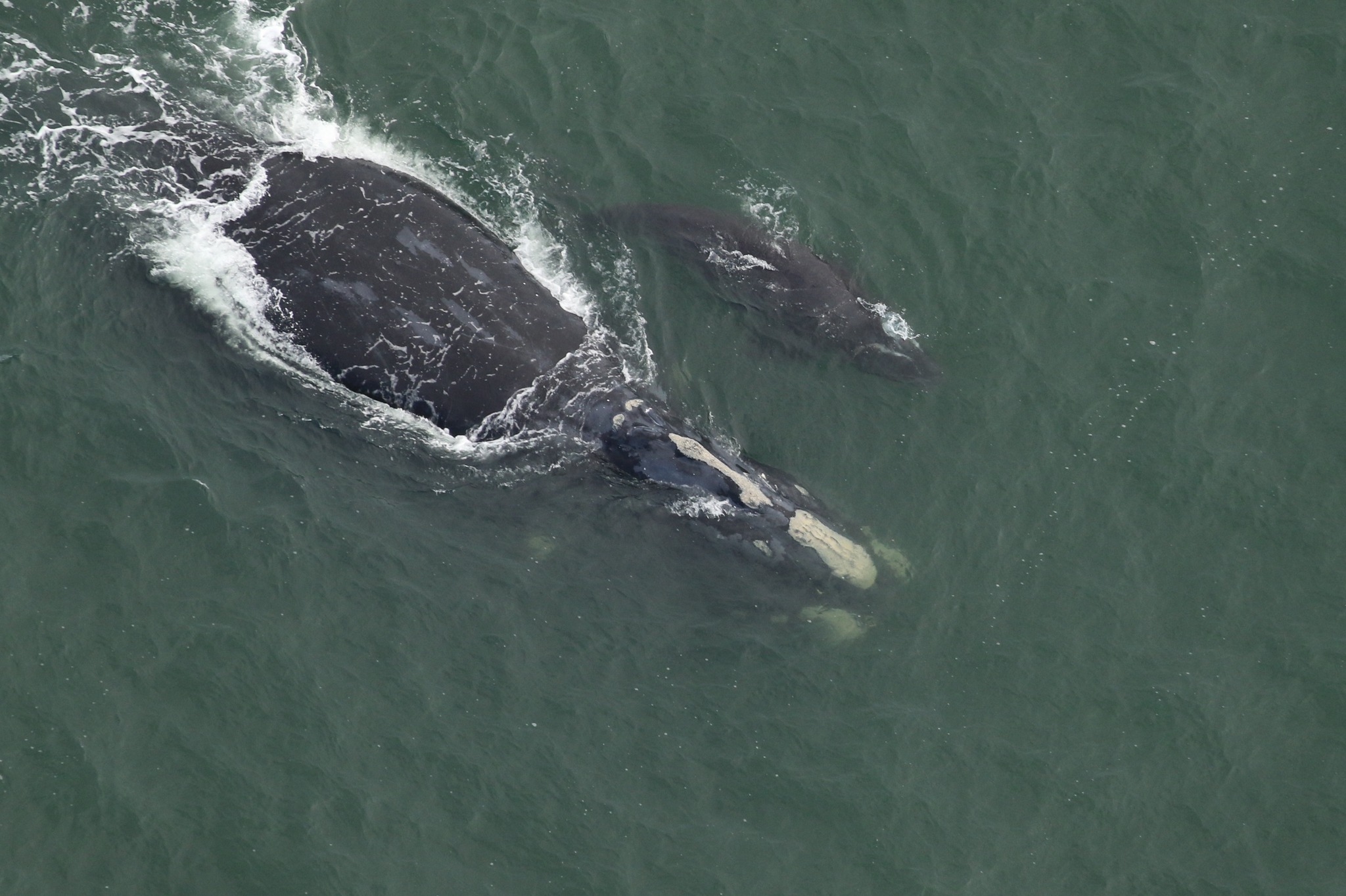
Catalog #1612 Juno is the first right whale sighted with a newborn calf this winter. The calf is no more than four days old and the pair was sighted near the entrance to Winyah Bay in South Carolina on Nov. 28. Catalog #1612 is at least 38 years old and this is her eighth calf documented by researchers. Photo Credit: Clearwater Marine Aquarium Research Institute, taken under NOAA permit #26919. Funded by United States Army Corps of Engineers.
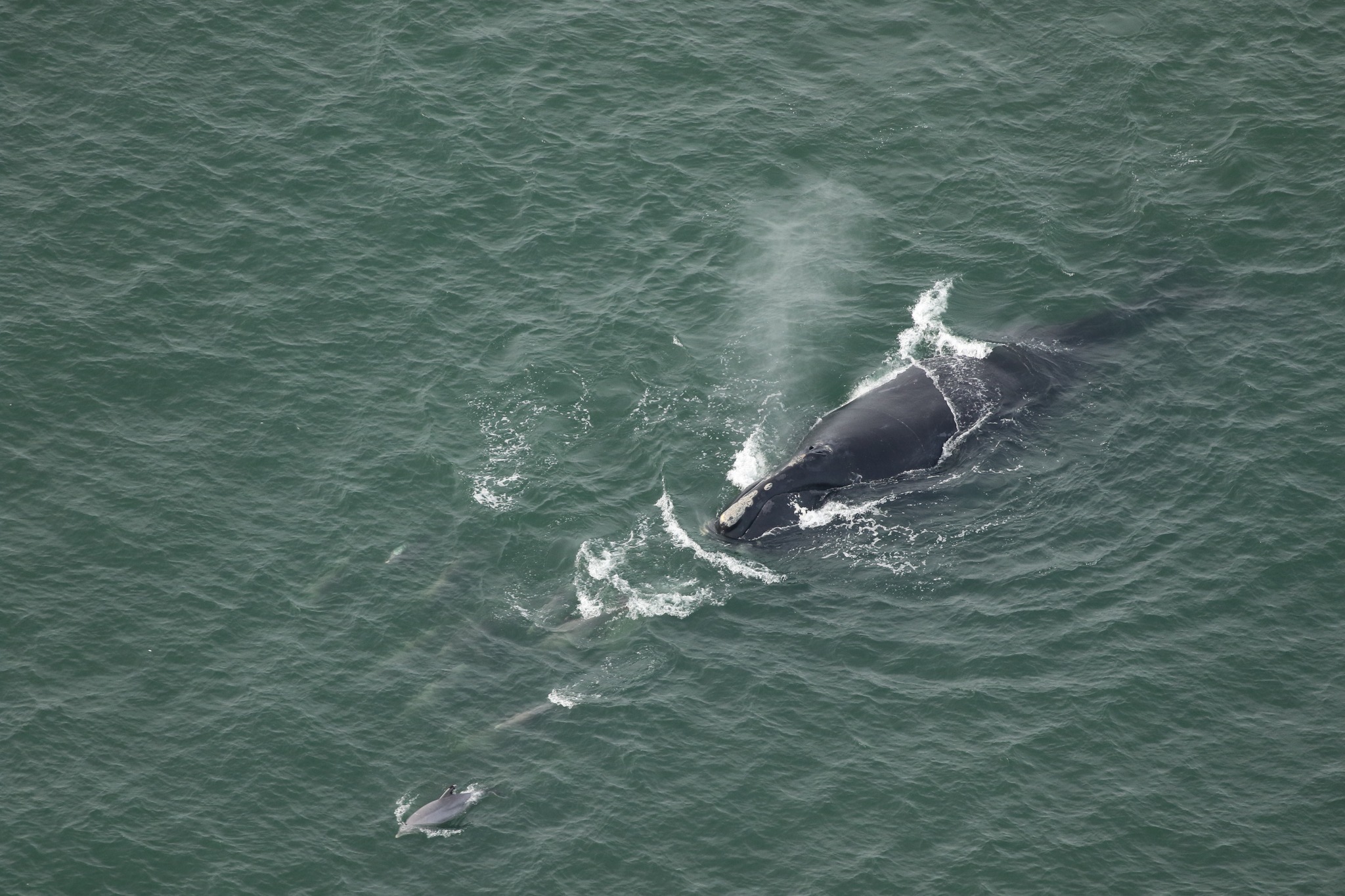
Catalog #1703, Wolf was sighted approximately 2 nautical miles offshore near the VA/NC border on Nov. 15. Catalog #1703 is a 37-year-old female and potential mother this winter. Photo Credit: Clearwater Marine Aquarium Research Institute, taken under NOAA permit #26919. Funded by United States Army Corps of Engineers.
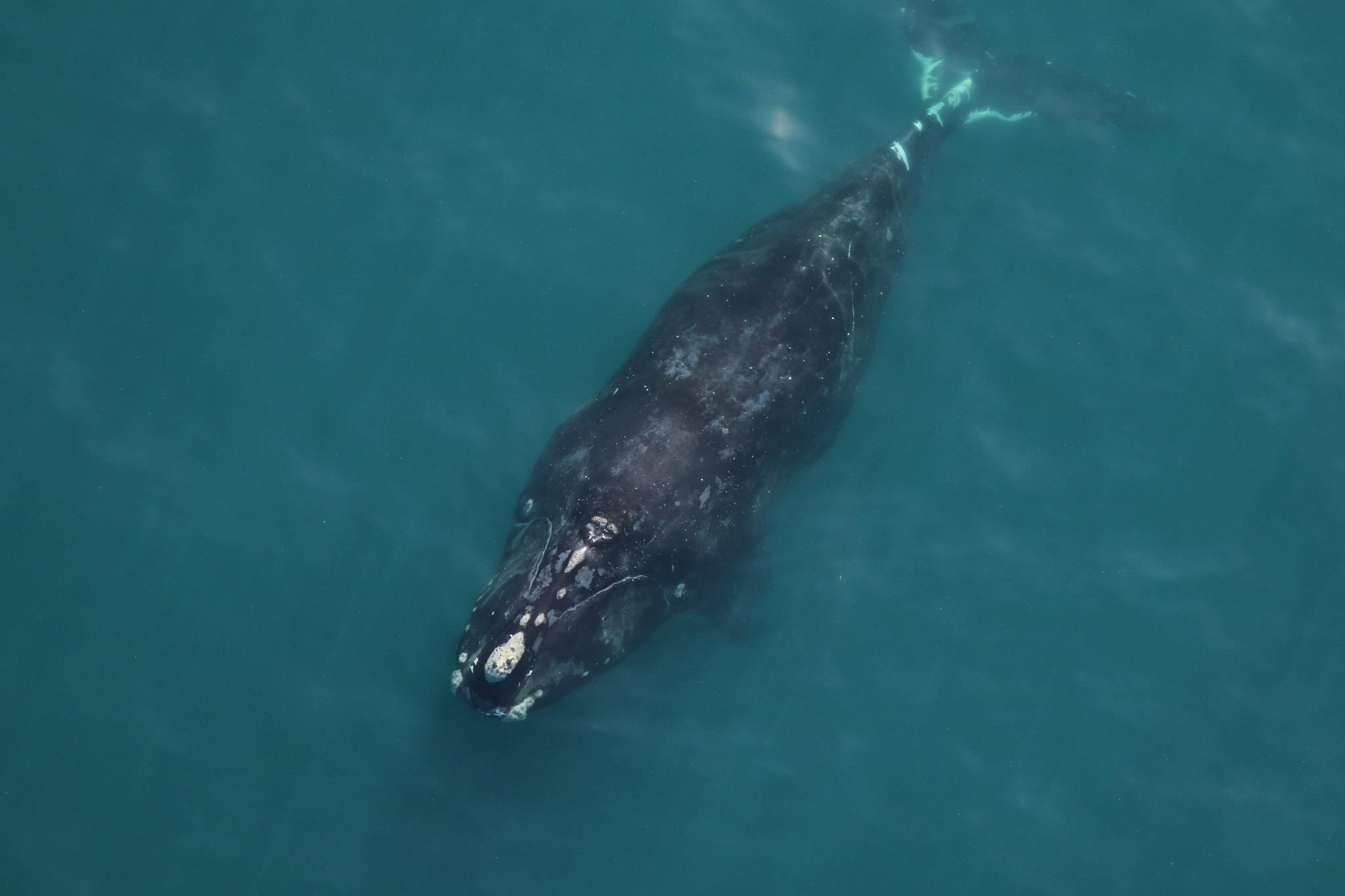
Catalog #3360, Horton was sighted approximately 14 nautical miles off Tybee Island in Georgia on Nov. 18. Catalog #3360 is at least 21 years old and was sighted traveling with another adult female, Catalog #3320 Braces. Photo Credit: Clearwater Marine Aquarium Research Institute, taken under NOAA permit #26919. Funded by United States Army Corps of Engineers.
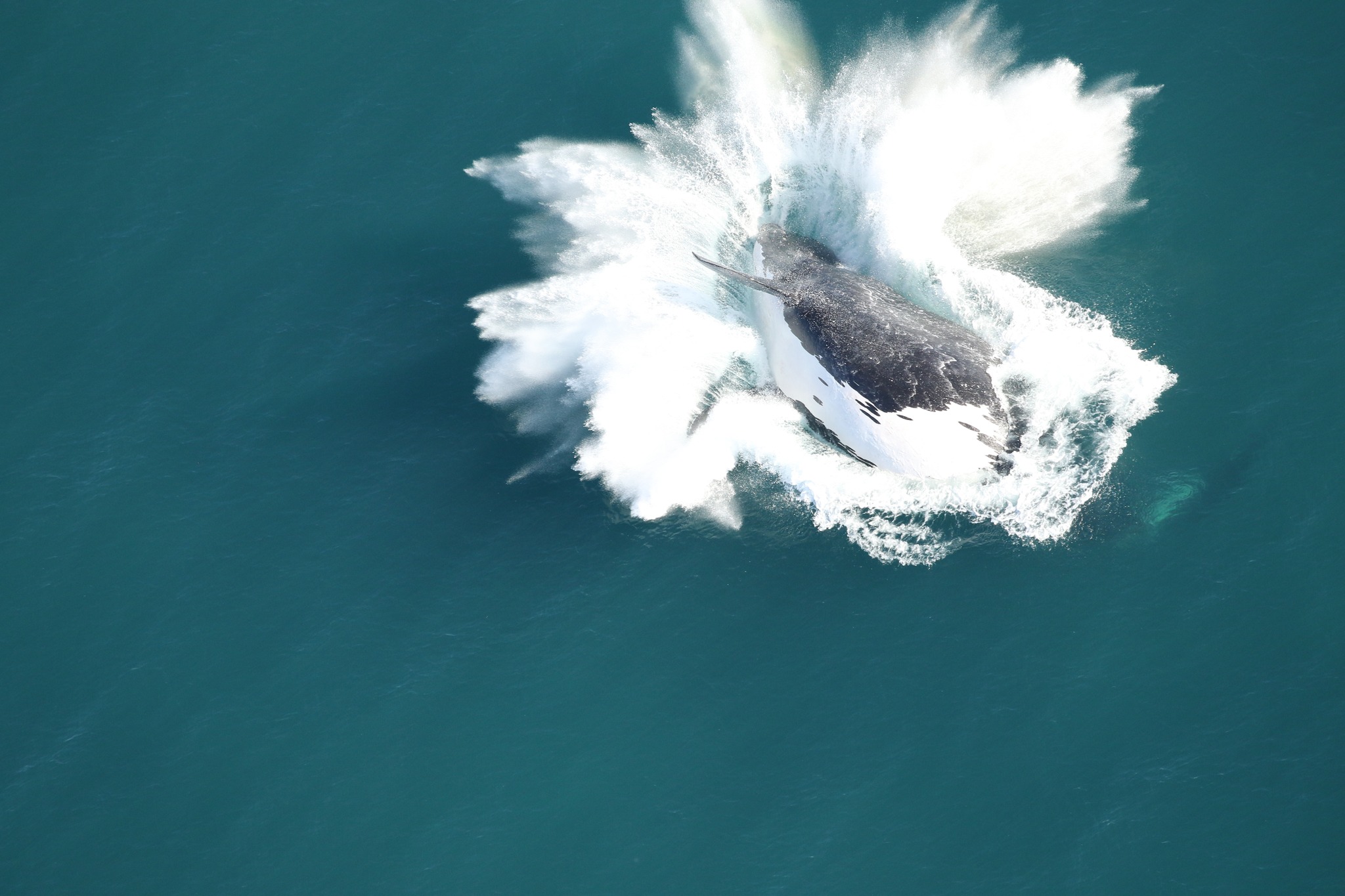
Catalog #3360, Horton seen breaching approximately 14 nautical miles off Tybee Island in Georgia on Nov. 18. Seven more adult females ranging in age from 14 years to more than 42 years old have been sighted from North Carolina to Georgia since Nov. 15, all potential mothers this winter. Catalog 3360-Horton breeching.jpg Photo Credit: Clearwater Marine Aquarium Research Institute, taken under NOAA permit #26919. Funded by United States Army Corps of Engineers.