

The 12 lucky grapes
2023 is nearing its end. As family and friends congregate together, saying either “sayonara,” “good riddance,” “arrivederci” or “it was a good year,” we look forward to what the New Year will bring. In the southern United States, we traditionally kick off the year with black-eyed peas and collard greens for luck. Globally, different cultures celebrate the arrival of the New Year in unique, fun ways to help bring them luck. Pennsylvania’s “Dutch” Germans eat pork and sauerkraut, Haitians (who are also celebrating their Independence Day) share soup joumou, Danes smash plates on the doors of their friends and family’s doors, and Colombians place potatoes under their beds in a tradition called “agüero.” One of my favorite New Year’s Eve celebration traditions is called “Las doce uvas de la suerte,” or the 12 lucky grapes.
10, 9, 8 – Everyone is frantically grabbing their bowl of 12 grapes. 7, 6, 5 – You gather with your friends and family. 4, 3, 2 – You double-check your grape count, no more, no less. 1 – A quick final reflection on the year in anticipation of the new year. 0 – ¡Feliz año nuevo! The clock now chimes 12 times, and with each chime you eat a grape. During the 12 chimes, you must fully consume your grapes. A grape at each chime; 12 grapes, 12 months, a year’s worth of good luck.
Many people debate the origin of this Spanish tradition. Originally the tradition was believed to be a celebration of a grape bumper crop in the early 20th century. Recent evidence shows it could have originated as a mocking gesture to the upper class. Despite its origin, eating 12 lucky grapes evolved into a nationwide tradition.
Grapes are a culturally significant crop in Spain as a result of their wine industry. Similarly, grapes are an important crop in the United States. Florida used to be a bigger producer of grapes, but the industry was devastated by a bacterial infection called Pierce’s disease. When coupled with our heat and humidity, which increases the prevalence of fungal diseases, growing bunch grapes became a futile effort. Luckily, through breeding, new bunch grape varieties resistant to Pierce’s disease are available for homeowners, agricultural producers and viticulturalists.
There are many varieties of grapes we can grow in Florida for consumption, wine or juice/jellies. My favorite dooryard grapes include Conquistador, Daytona, Suwannee and Stover. For Nassau County, we have areas of alkaline soil (soil pH greater than 7.0), so selecting grapes grafted onto “Dog Ridge” rootstock helps accommodate the alkaline soils. These varieties are self-fertile, too, which makes it easier.
If planting bunch grapes in your garden, it is best to plant them during their dormancy period. In North Florida, early March is a perfect time. Grape rows should be 10 feet apart, and grapes should be 7.5 feet apart within their rows. Grapes prefer well-drained soil atop an underlying clay layer, which makes many parts of West Nassau County an ideal location.
Build a trellis if you plan on growing multiple grapes. However, many homeowners could use an existing trellis or arbor to support a vine or two. Training vines during their first year in the ground will be vital. On a traditional grape trellis, prune back every vine that fails to reach the trellis wire. For the other canes reaching the top wire, prune so you only have one cane with 3-5 buds going in each direction along the wire. In subsequent years, you can add extra canes to the trellis. Older canes can support more buds. Pruning grapes produces higher-quality fruits.
Fertilization is important for grapes. Complete a soil analysis to determine if any soil pH adjustments need to occur. For the first year, fertilizer in lateral bands about one foot away from the vine with a 1/4 pound of 6-6-6 or 8-8-8 once spring growth begins. Repeat this application in May, June and early September. In the second year, apply one pound of the fertilizer in February, May and post-harvest. To improve nutrient uptake, keep a 4-foot wide weed-free area around the vines. You can do this with herbicides or mulch.
Irrigate grapes as needed. Older plants should get about 1-1.5 inches of water each week in April and May, but young vines in sandy soils may need more frequent applications. A regular fungicide application will be needed to prevent fungal pathogens. Begin applications once new growth is three inches long in the spring, and reapply every 10-14 days until a week before harvest. This will prevent many of our prevalent pathogens from impacting grape production.
Grapes are wonderful additions to our gardens. By preparing to plant now, we can celebrate 2025 with 12 lucky grapes we harvested from our gardens. Happy New Year from UF/IFAS Extension Nassau County! If you have any questions about managing your gardens and landscapes, you may reach out to the Nassau County Master Gardener Volunteers at NassauMGV@ifas.ufl.edu.
Dr. Taylor Clem is the County Extension director and horticulture extension agent for UF/IFAS Extension Nassau County. Contact him at taylorclem87@ufl.edu or 904-530-6351.
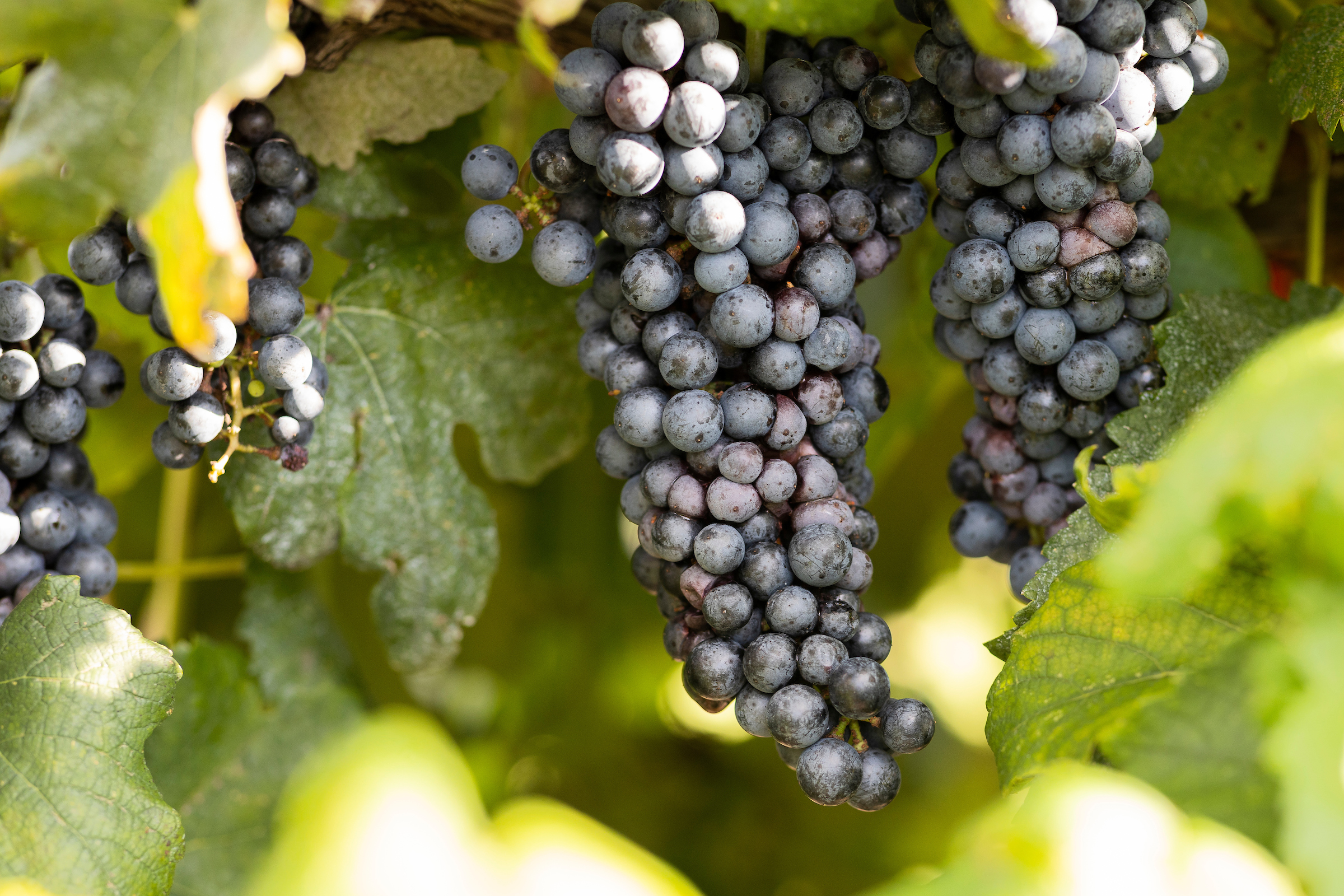
The University of Florida is always testing and experimenting on newer grape varieties for agricultural production, including these European grape varieties. Photo courtesy of UF/IFAS Communications and Cat Wofford.