


Brian Douglas
Building a two-seat sportscar is not for the feint of heart. The market for these fun coupes and roadsters are either young enthusiasts who have not yet started a family, or empty nesters who have the wherewithal to acquire a “fun” second car. My apologizes if I’ve inadvertently left your demographic out. But the segment is always challenging for major automakers who like the scale of high volume.
Toyota’s Supra was created in 1978 as a Celica model edition by stretching the little sport coupe about six-inches and replacing the four-cylinder engine with a more powerful six. The North American dealers wanted a competitor to Datsun’s (Nissan) popular Z series sportscars. Both the Supra models and Nissan’s Z cars grew in size and price and both took a timeout from our market in the late 1990s and early 2000. Meantime, Mazda has kept its Miata sportscar humming along by not messing with a pretty good thing.
Toyota made a shrewd move to bring its Supra sportscar back. Akio Toyoda is the scion of the automaker’s founding family and an earnest and competent race driver. Toyoda was also running the company at the time and wanted a Supra model back in the lineup but he knew the volume would be small by Toyota standards and development costs a bit high. So in what’s proved to be a brilliant move, Toyota teamed with BMW to share the development costs and contract the manufacturing out to Magna Steyr in Austria.
There’s a sweet, smooth inline six under the Supra hood and it’s BMWs along with either a six-speed manual or eight-speed shiftable automatic transmission. If you like your sportscar in coupe form, you pick Toyota’s GR Supra. For those who want wind in their hair, BMW’s Z4 is the option. OK, that’s a bit of an oversimplification because there are lots of subtle differences, including styling and price, but you get the picture.
All new Supra models are GR versions, Toyota’s acronym for Gazoo Racing. Gazoo is the motorsport group that races in championships which include World Rally (WRC) and World Endurance (WEC). The sub-brand for road cars is analogous to BMW’s M or Mercedes-Benz AMG but Gazoo is a bit more lighthearted. The result in the Supra I spent a week in was certainly smile inducing.
The newest Supra looks great, with big nostrils up front sniffing gobs of air and on the trunk lid of our car, a serious black spoiler was perched to provide downforce, presumably at triple-digit speeds. And while you’re driving that fast, there’s a rear air diffuser down below that separates two serious exhaust pipes. I felt like I should suit up in Nomex and put my helmet on to drive this machine. But entering and exiting this Supra with its swept roof was challenging enough without headgear.
Inside the interior pays off the sporting demeanor with deep bolstered bucket seating, race ready pedals and a big tachometer that’s the most prominent instrument in the hooded panel. It all says “strap up and hit the start button.” And isn’t this what you want in a sportscar? I thought so.
Of course there’s competition in this segment besides BMW’s Z4 M40i roadster. Nissan’s Z NISMO will certainly give the Supra a good run for the same money. And as long as we’re writing a sixty-thousand-something-dollar check, we’re in Corvette C8 territory and that’s an unfair fight in my opinion.
The Fine Print
2025 Toyota GR Supra
TYPE: Front-engine, rear-wheel-drive
ENGINE: 3.0-liter Turbocharged I-6
HORSEPOWER: 382 @ 5,800 RPM
TORQUE: 368 lb.ft. @ 1,800 RPM
BASE PRICE: $64,375
AS TESTED: $65,470
FUEL CONSUMPTION: 19-city, 27-highway, 21-combined
Brian Douglas has driven everything with wheels during his career in automotive technical, marketing and journalism professions. If you have a question or story to share, he can be reached at brian@autoeditor.com.
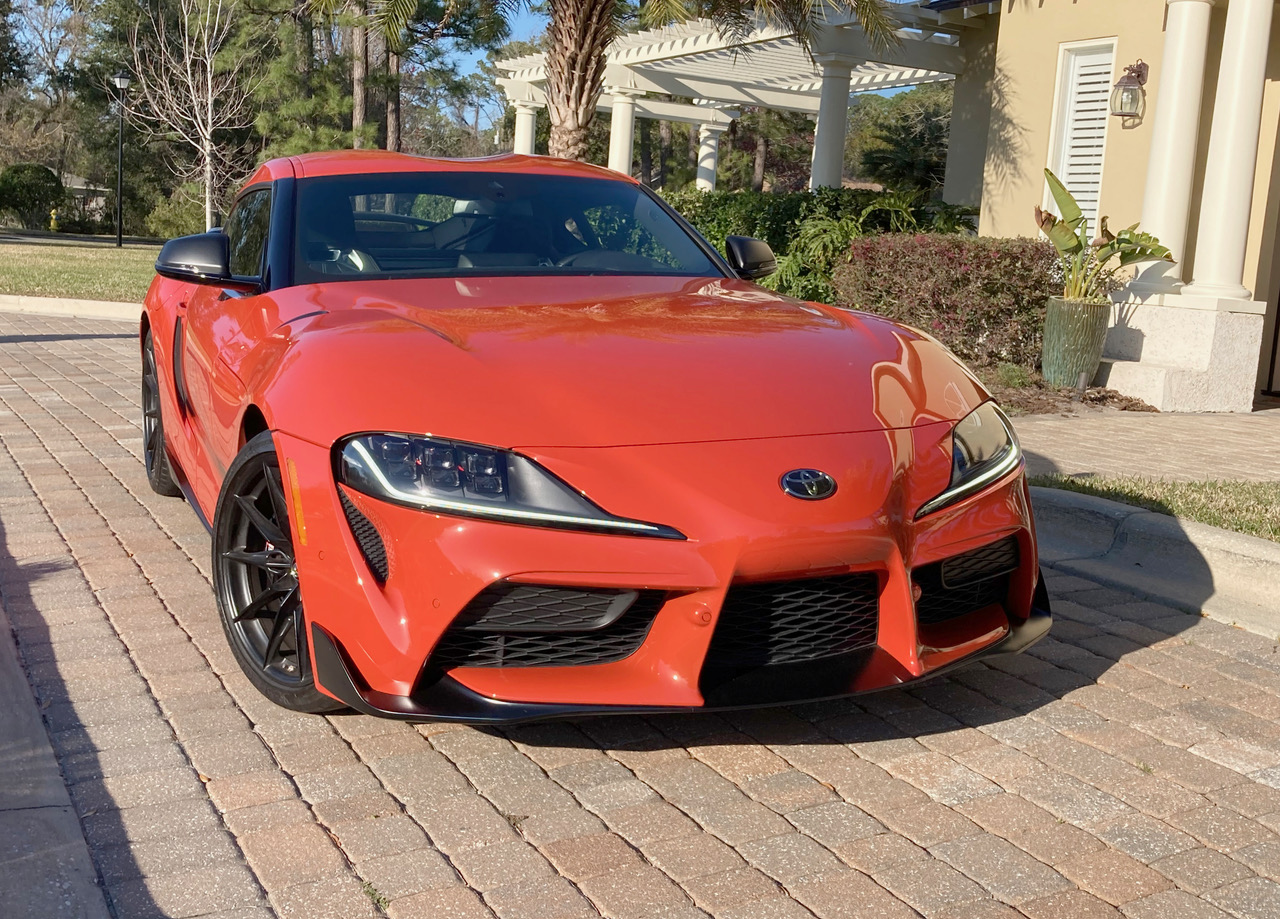
The Supra GR has the right growl. B. Douglas, Autoeditor
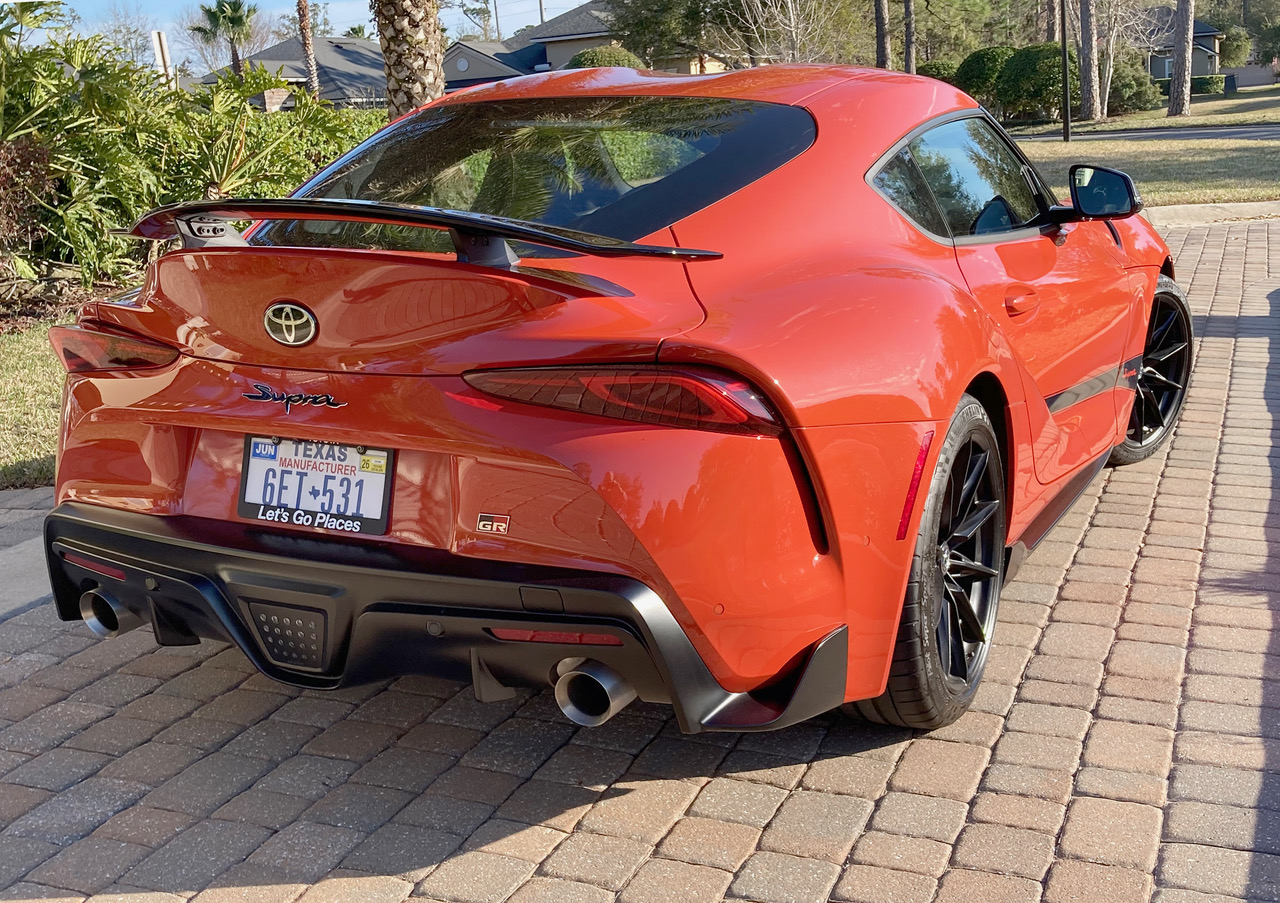
The Supra GR has the right growl. B. Douglas, Autoeditor