

Christopher Nickoloff is running for City of Fernandina Beach Commission – Seat 4 in this year's general election.
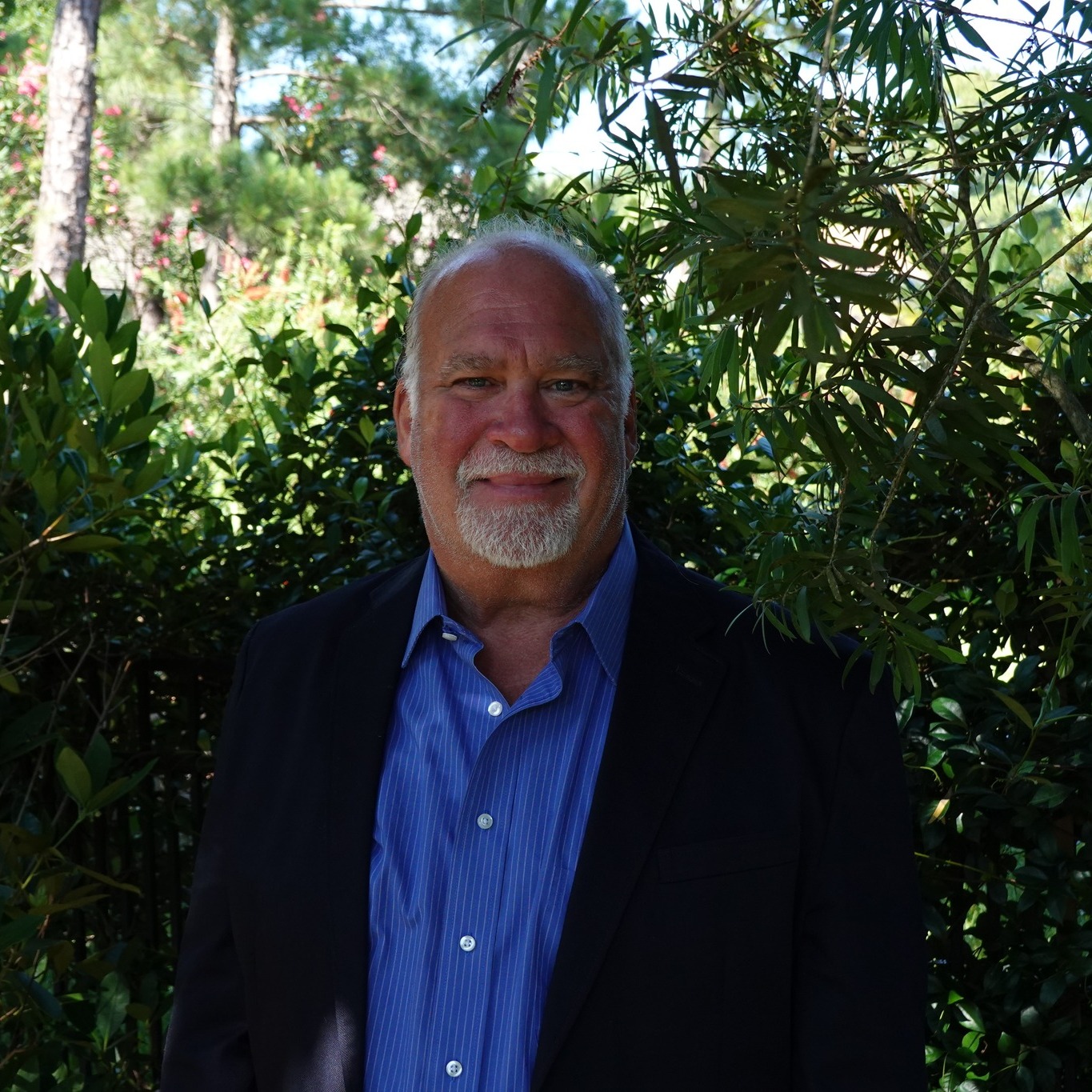
Christopher Nickoloff
Website: https://chris4commish.info/
Email: chris4commish@gmail.com
Phone: (904) 468-9564
CANDIDATE QUESTIONNAIRE
Could you give us some general information about yourself?
In 2016 I retired from South Metro Fire Rescue Authority, just south of Denver, after a lifelong career as a firefighter. In 2017, I retired after working 26 years part-time as a 911/Emergency Dispatcher for the City of Littleton, CO. My wife Janice sold her small business which she operated for 20 years, in 2019. Tank and Duke, our two rescued Plott-hounds are an important part of our family. I am now fully retired as is Janice. Although, I do work two days a week at McArthur YMCA as a lifeguard.
We bought our Fernandina Beach home in 2018, with the intention of permanently retiring here. It was an extensive search that took 2 years to find Fernandina Beach. Once Janice sold her small business, we moved permanently in 2020.
Have you ever run for/held public office before?
I have never been elected or run for office in a municipality. But I have extensive experience working on Firefighter Boards, Firefighter State Associations and was a founding Director of a Firefighter Foundation in Colorado. Plus, a stint as an HOA President.
What part of your career or life experience do you believe gave you the skillset to be a City Commissioner?
Over my vast lifelong career in public service, I have gained the knowledge, skills and abilities on how to serve and provide customer service to constituents. I have also been part of the budgeting process for the organization I worked for. At one point I oversaw the development of a roughly half-million-dollar budget for the Hazardous Material Response team. For several years I was part of the management team. Part of my responsibility was in the planning and development of disaster and emergency response scenarios. At the time when DIA (Denver International Airport) was being developed, it was within the response district I worked for. I attended and participated in many disaster and planning scenarios with other stakeholders in the area.
I negotiated many successful contracts over the course of my career. I was able to reach compromise, and most importantly accept compromise. As an example of the respect I earned, I still correspond with a board member who I sat across the table and negotiated with.
Over the course of my careers as a professional firefighter and a 911/Emergency Dispatcher, I was faced with many stressful situations. These were pressure-filled situations that required split-second decision-making. I plan to apply the decision-making skills and leadership style I learned to my role as a commissioner.
And finally, I have been attending every City Commission meeting since the end of January. I have formally introduced myself to the various city advisory committees. I have also met with most city department heads to learn their function, operation, and challenges. I have met with various community leaders to learn their challenges and vision for Fernandina Beach. All these interactions have prepared me for the role of commissioner and provided me the ability to bring solutions to the table.
What do you feel are the biggest problems facing the City?
First, our city facilities are in rough shape and failing. Their upkeep, routine preventive maintenance, and equipment replacement have been ignored for too long. This must be addressed as we are soon approaching a point where serious decisions must be made on how to approach this dilemma. It is getting to the point where some of these problems are becoming safety issues, requiring immediate action.
Next, we must identify new sources of revenue so the burden of paying for infrastructure breakdown caused by our visitors is not placed on the backs of property taxpayers. Some examples are Park and Recreational facilities, beach parking lots and dune walkovers.
And last, growth. There are two parts to this story. Managing growth on the island and planning for the impacts of growth off the island. I realize there are some who want Fernandina Beach to not grow anymore. But unfortunately, that is an unrealistic endeavor in my opinion. Growth is occurring everywhere and will continue to do so. What is realistic, is acknowledging that growth will occur and walking that tightrope of balancing conservation efforts, impact on wildlife, limiting tree loss, shoring up strong zoning restrictions, while respecting property rights and development. It is imperative that we continue to keep the preservation of our tree canopy as a top consideration. We can do better, not bigger.
There are several things we can do, and I think our planning, historical and other advisory committees have so far done an excellent job in managing this. I was impressed by the caliber of talent we have on these committees/departments and their sincere dedication to keeping Fernandina Beach beautiful and historically significant.
The second part is something we do not hear much about. And that is addressing the growth off the island and its impact on our quality of life. There are currently two to three more developments the size of Wildlight planned. And guess where they will come to recreate? Crowded restaurants, traffic congestion, longer lines in grocery stores, parking difficulties (downtown and the beach), and an increased call load to public safety, just to name a few. These are what we can expect if not planned appropriately. Some of which you are already experiencing. I think this part is the more important issue we need to plan for. You don’t hear talk about this part. But it’s time to talk about it now.
A common theme with all three of these problems, and others, is, they were and are avoidable. But because of a lack of leadership, we now find ourselves having to face difficult decisions. More leadership is what the Commission needs now, not the status quo of conformity. It’s time to have a commission that is forward-thinking.
Now that the marina has received a payment to pay off an accumulated cash deficit, do you think the marina can be financially self-sufficient?
If the question is to let the marina continue its operation with the current arrangement between the city and Oasis, I say yes. Currently, the city pays Oasis, $4500/mo to manage the Marina. However, the city recoups more than that from sales receipts, slip rentals and fuel purchases. This is expected only to get better. Right now, there is a long waiting list for slip reservations. Demand is high and anticipated to increase over time. In addition, there still is close to $10 million in debt service the city is responsible for. This debt service comes at a $750,000 per annual payment. Continuing the relationship with a competent contractor helps put more money back towards paying of the existing debt service.
What changes do you think the City can make to help the golf course become financially self-sufficient?
There are a lot of viable plans floating around out there that deserve consideration. However, I would not be in favor of any suggestion that creates fees that would be out of reach for city residents. It’s a city municipal course and an amenity for all city citizens, regardless of economic scale. This one aspect must be considered with any improvement plan for the golf course.
First, I think the best decision the Commission made was to recently keep management of the course in-house versus sending out an RFP for contract services from a private company. We tried this and it was a hard fail. Now, after several months, the course condition is improving, playtime is increasing, and concession revenues are improving. It’s not perfect by any means, but it is improving. A private company only has interest in making money. And although the golf course is an Enterprise Fund, a cost-neutral scenario should be the goal.
The introduction of Top Tracer was another hard fail. The commission voted to spend $500k on Top Tracer technology instead of putting that money back into course improvement. Plus, when Top Tracer was built, the building was built with no water and no kitchen. Players must walk to the clubhouse to use restrooms or purchase concessions. This was a huge mistake in planning, which pretty much doomed the program. It is now slowly on its way to recovery, hopefully, but will never reach its full potential until water and a kitchen are provided.
I would also explore placing the golf course under the direction of Parks and Recreation department. It could run as its own Division, but ultimately be overseen by Parks and Recreation. For example, if a tree branch has fallen on the course, or a tree needed to be trimmed, a work order could easily be placed with P/R and scheduled. The golf course would then be billed back the services.
How could the City Commission improve its relationship with the Board of County Commissioners and the Ocean Highway Port Authority?
Simple. One-on-one relationship building. Right now the standard way of communicating seems to be through written correspondence, or through media. A good start would be either one-on-one communications or a group round table meeting. That’s where I’d begin. I have already had a meeting with a county commissioner about this and other topics. I want to mend this relationship.
OHPA is another animal. I think if the right commissioners are elected to both commissions, the communication would improve. However, they still must pay their fair share in lieu of property taxes. As an example, the City currently provides fire protection to the port, for free. That’s not fair. And an improved relationship could help mend that predicament.
Do you think the City should raise the surcharge (currently 25%) for users of facilities that are non-City residents?
Simple answer, yes. By how much, should entail robust discussion. Currently, city facilities are mostly funded through ad-valorem taxes. This means City property taxpayers are subsidizing unincorporated county residents’ use of these facilities. The full burden should not fall on City property taxpayers. Ways to fairly cost share between the city and county need exploration.
The primary members of organized youth sports leagues who utilize city parks are unincorporated county residents. Roughly two-thirds reside in the unincorporated portion of the county. I can empathize with county residents who may push back on increased rates. But until a fair means of cost sharing is established, the city needs to recoup some of the operational costs.
What parts of the City’s budget are of the most concern to you?
There really isn’t one item in the budget that concerns me. But, what really concerns me is how we pay for things. The city has a pattern of ignoring much-needed repairs to major assets and then putting small amounts towards patching them up. Now, as the facilities reach their end of useful life, we face either full-scale replacement, demolition or another patch to get us through another year. A good example of this was the recent bond issue debacle. After having initial consensus to move forward with putting a referendum to the people, the plan broke down. And now we are back to square one. Same problems, no solutions. And, there’s a misconception that a yes vote by the commission was to approve the bond. No, all a yes vote from the commission was to send it to the voters to decide. The electorate could approve or disapprove. Pure democracy.
I would propose exploring resurrecting the bond issue. But, this time have the line items detailed and prepared for the public. Prioritize projects by importance and list out in detail that the public can understand, adding in information of the total cost to property taxpayer. Although we can “float a bond” at any time, since we missed the window to tie it into the upcoming election, it would cost us an additional $23k to oversee the election. To save that money we must wait till 2024. Another failure in my opinion.
There are rumblings about the budget needing to be revisited to find waste. And although I agree there may be some waste, I think it would be an exercise in futility. I don’t believe the end result will justify the means. Or put another way, the amount of time, effort and money spent into a large review, would only identify small amounts to cut. It’s a great line for a rally cry, but unrealistic in my opinion. However, I do think it would be healthy that each department head be tasked to find at least 3% to cut in their budget once every three years.
Lastly, the city receives zero revenue from bed tax. Meaning, that every time someone stays at one of our local hotels, the city receives no tax revenue. That revenue is shared by the state, county and Tourist Development Council. Amelia Island is promoted as a destination location, yet the city property taxpayer carry’s the burden of funding maintenance on city infrastructure, such as beach access parking areas. As a response, we hear that the city receives sales tax revenue from visitors buying goods and services. The city only receives roughly 0.05% sales tax revenue. While the County and State receive the bulk of the proceeds.
What do you think, if anything, the City should do to encourage development in the CRA?
Not sure the city needs to do anything directly. The CRA is the city commission. The CRA Advisory Board on the other hand was formed to perform that exact purpose. The committee is (or should be) comprised of experts that have a network and contacts to reach out to potential developers or investors. The CRA money collected over the years can be used to offset infrastructure needs for future development as incentives. That’s why CRA money is being collected. The city commission (CRA) should be updated on any interest in any property inside the CRA zone. And the city commission would give the final approval of any proposed project.